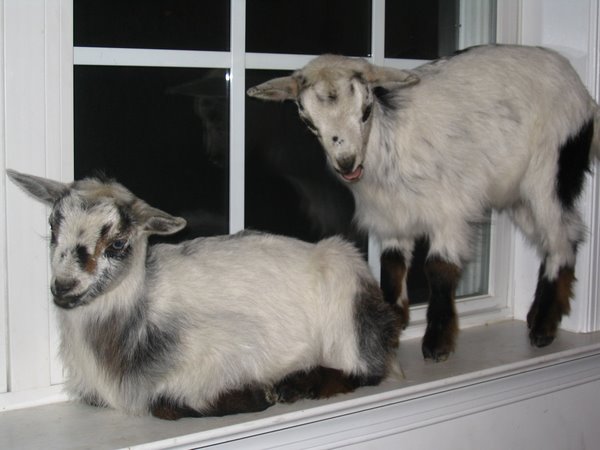
Today Caeli received her First Holy Communion--the greatest gift of all!
Happy Epiphany!
A Legend From Russia
Babushka, the Grandmother, snug in her room
Sat nodding and nodding over her loom,
Sat suppered and snug with no desire
But a welcoming bed and an ample fire
When out of the winter’s rush and roar
Came shepherds knocking upon her door,
“Grandmother, Grandmother, old and wise,
In Bethlehem’s barn a princeling lies;
“Lies Mother and Child where oxen feed.
Hurry, Babushka, to nurse their need.”
Babushka listened, but made no stir.
She thought of the sheets turned down for her,
Of shutters latched and the larder dressed
And her bones that ached for rest.
“Tomorrow,” she muttered. “Wait till then.”
But sternly the shepherds knocked again.
“Grandmother, Grandmother, rich and skilled,
Then send but a kindly basket filled
“With comforting gifts, with meat or bread,
And we will carry it in your stead.”
Babushka listened, nodding anew.
“Tomorrow,” she murmured, “Tomorrow will do.
“I’ll bring the best from my cupboard’s store,
Tomorrow.”
The shepherds knocked no more.
Babushka slept though her dreams were troubled.
At dawn while the porridge bubbled,
She packed a basket brimming with sweet
Loaves and oranges, cakes and meat,
A shawl for the Lady, soft as June,
For the Child in the Crib a silver spoon,
Rattles and toys an ivory game,
But the Stable was empty when she came.
So now with provender weighted down
She wanders the world from town to town
At Christmas time, though the winds are shrill,
Through brier and brush, over heath and hill,
Seeking the Manger still.
And wheresoever a good child sleeps,
Dreaming of day, Babushka creeps
Silently, hopefully, up the stair
And leaves three gifts from her basket there—
One to marvel at, one to enjoy,
And one for the kingly Boy.
Crochet an Babushka for your Own Wreath of Christmas Legends! You can change the colors to make her look Russian.
Tuesday, January 6, 2009
A Legend From Russia

Monday, January 5, 2009
Why the Owl Wakes at Night
Poor Owl! We have an owl in our woods and every once in a while I hear him calling, "Who? Who?" This one reminds me never to be lazy or procrastinate--a good one to start the new year off with.
Why the Owl Wakes at Night
The owl that hunts
A shadowy prey
Loved morning, once,
And honest day
Like his sun-striding
Brotherhood,
Till Wise Men riding
Through a wood
To bear the Word
Of Bethlehem,
Summoned each bird
To follow them
“You, feathery nations,
Quick, take wing.
Come greet Creation’s
Newborn King.”
From sleep, like arrows,
All arose—
Doves, linnets, sparrows,
Cackling crows.
Faithfully through
The holy dark
The heron flew,
Flew the meadowlark,
Chanting in wild
Ecstatic chorus,
“A kingly Child
Is waiting for us.”
Fled every fowl,
Forsaking rest.
Only the owl
On his warm nest,
Grudging to see
Finch pass, and swallow,
Croaked, “Who is He
That bids me follow?
“Who? Who?” he muttered,
Loath to fly.
“Who, who?” and shuttered
His round eye,
Nor left his bough
Nor way the glory.
And penitent now
(So runs the story),
Nightly must mourn,
“Who’ll guide me to
The small Newborn?
Who, who? Oh, who?”
Must for distress
Stay broad awake
And comfortless,
That would not break
His comfort for Love’s sake.
Crochet an Owl for your Own Wreath of Christmas Legends!
Sunday, January 4, 2009
The Legend of the Cat
This one may give our cat-hating husbands "paws"! Naaaaah, probably not.
The Legend of the Cat
At midnight’s stroke,
On the first Christmas, half the world awoke.
Then out of the nest and lair
Came thronging to Bethlehem the wordless folk;
Hurried the beasts of the forest, the birds of the air,
To pay the Lord their homage and His due.
And Cat came, too.
Minding on delicate feet to see the Child,
But being shy and wild,
Approached no nearer than the hearth; lay dumb
And distant there.
While the rest knelt in praise,
The Cat by too much glory overcome
Could not withdraw her gaze
From the Nativity; could only stare
Through slitted eyes as things of fur and feather
(The deer beside the lion, the pheasant, the hare
Safe in the fox’s paws) bent down together.
Although their anthems lifted all around,
She, in her throat, made only a trembling sound
And could not bow her head.
Yet as the morning dawned
And one by one the other creatures fled
Each to his habitat—
The eagle to his crag and to his pond
The otter—only Cat
Remained beside the dying fire, unable
To quit the place that was both Crib and Stable.
Then Mary spoke aloud.
“Dear Cat,” she said, “dear, stiff-necked, proud
And obstinate beast, I bless you. From this hour
Leave wilderness behind you.
Because you stayed, though none shall have the power
To call you servant, yet the hearth shall bind you
Forever to itself. Both fond and free,
Wherever Man is, you shall also be.
And many a family
Will smile to hear you singing (where you settle)
Household hosannahs like a pulsing kettle.”
Some winter night
Observe Cat now. Her eyes will suddenly gleam
Yellow against the light,
Her body shudder in a jungle dream,
Her claws unsheathe their sharpness. She remembers
Old times, old barbarous customs, old Decembers
Before she called the tribes of Man her friends.
But the dream ends.
Then, reassured, she curls herself along
The floor and hums her cool, domestic song.
Crochet a Cat for your own Wreath of Christmas Legends!
Saturday, January 3, 2009
Ballad of the Robin
This one's my favorite!
Ballad of the Robin
Long ago, long ago,
When the times were stranger,
Once a Lady and her Son
Rested in a manger,
In a manger on the straw.
The night was shrewd, the wind was raw,
And the dull fire, untended, kept
No comfort where the Infant slept.
Then she, too spent to mend its spark,
Spoke to the beast-enfolding dar,.
“Oxen, lest He should come to harm,
Rise up and blow these embers warm
“With your great breath, for mercy’s sake.”
But the rapt oxen did not wake.
“Ass, will you breathe upon the flame?”
But the ass, dozed nor heard his name,
While heavy the cart horse dreamed beside
His feeding box that Christmastide.
Then suddenly the midnight stirred,
In from the winter at her word
There flew a brown, South-seeking bird.
Bravest of all created things,
He made a bellows of his wings.
He puffed his feathers to a fan,
Singing, until the ash began
To kindle, glow, to burn its best.
The flame leaped out. It seared his breast,
But still the robin, loud with praise,
Beat his quick wings before the blaze
So all the stable was beguiled
To warmth. And softly slept the Child.
“Kind Robin,” then the Lady said,
“Wear from now on a breast of red.
“Where the fire was, let fire remain,
A blessed and perpetual stain
“Burnt on your heart that all may see
The signature of Charity.”
Long ago, long ago,
When the times were stranger,
Once a robin served the Lord
Who rested in a manger.
Crochet a Robin for your own Wreath of Christmas Legends!
Friday, January 2, 2009
Ballad of the Nightingale
Listen to the nightingale's song! How lovely is the chorus of God's creation, singing lullabies to the baby King. Who needs modern technology!?
Ballad of the Nightingale
Hark! when on hill and dale
Hang the night-hushes,
Then sings the nightingale,
Sole among thrushes.
Sole among thrushes, she
Pours out of shadow
Torrents of melody
Over the meadow.
While lesser birds devote
Nighttimes to slumber
Ravishing from her throat
Note after joyful note
Flows without number.
Why does she shun the day
For dark and danger?
There was a Child that lay
Cold in a manger,
Cold in His narrow bed,
Wakeful and chilling.
Him once she comforted
With her sweet trilling;
Sad that a babe should lie
So undefended,
Sang Him a lullaby
Till the night ended,
Sang like a Seraphim.
Then spoke His mother,
“You brought your song to Him,
All the night long to Him,
You and no other.
“Lone on your leafy bough,
Brave though imperiled,
You shall forever now
Be the moon’s herald.”
When over hill and dale
Fall the night-hushes,
Then sings the nightingale
Queen among thrushes.
Crochet a Nightingale for your own Wreath of Christmas Legends! Just change the colors.
Thursday, January 1, 2009
The Legend of the Holly
Happy New Year!
The Legend of the Holly
The holly berry that burns so red
(Raise high the holly!)
Once was whiter than wheaten bread
(As love is better than folly.)
Whiter than shells along the shore
It blooms on its tree by a stable door.
Villagers come there, half-afraid,
Gifts in their hands for Child and Maid.
And one has nothing of note, so he
Fetches a branch of the holly tree.
Alas, alas, the little Newborn
Has pricked His finger upon a thorn,
Has left His blood on the spiny leaves.
Heavy of heart the holly grieves,
Sees in a terrible vision how
A crown of holly shall bind His brow
When Child is man.
For sorrow and shame
The berries have blushed as red as flame,
Says Mary the Mother,
“Take no blame.
“But be of good cheer as ever you can.
Both foul and fair are the works of man,
‘Yet unto man has My Son been lent.
And you, dear tree, are the innocent
“Who weeps for pity what man might do.
So all your thorns are forgiven you.”
Now red, rejoicing, the berries shine
On jubilant doors as a Christmas sign
That desolation to joy makes way.
(Hang high the holly!)
Holly is the symbol of Christ’s Birthday.
(When love shall vanquish folly).
Crochet a Holly Sprig for your own Wreath of Christmas Legends! Crochet two together for a stuffed Holly Sprig.
Wednesday, December 31, 2008
The Night
Be of good cheer!
The Night
On the night that Christ was born
The rivers, one hears, ran fine
And sweetly between their banks,
Filled not with water but wine.
And any man who drank
Of that beneficent tide
(Though he had stooped in anger
To drink), grew pacified,
Loving even his foeman
As dearly as his bride;
Wholly at peace with himself,
The world and everything.
While the trees in the forest blossomed
As if the winter were spring.
Crochet a Bunch of Grapes for your own Wreath of Christmas Legends!
The Canticle of the Bees
I thought it appropriate to read this poem on the Feast of the Holy Family (I should have posted it yesterday), since it is also appropriate to eat milk and honey on this feast. This is a beautiful poem! May we hear the bees and all see God one day.
The Canticle of the Bees
Bees in winter
Weather keep,
Rapt, a garden-haunted
Sleep,
Dream of summer,
Still as stone,
Save on Christmas Eve,
Alone,
When that honey-havened
People,
Roused by bells
From every steeple,
Wake and sing
With one accord
Alleluias
To the Lord.
“Praise Him,”
Sing the choiring bees,
“Lord of limes
And locust trees,
“Him Who has
Dominion over
Fields of amaranthine
Clover,
“By Whose providence
We fare
Daily through
The throbbing air
“And return
In drowsy flight
From the pastures
Of delight,
“From the many-petaled
Rose,
Hiveward
When the shadows close.”
So, at least,
The legend goes.
Visit them
When bells arrive.
Cup your ear
Against the hive.
You may hear them
Singing thus,
Small
But multitudinous:
“Alleluia
Lord of all
Things that flutter,
Fly or crawl,
“Now Your Star
Has shone again,
Bless Your swarming Bees.
Amen.”
Wondering, walk there.
Do not fear them.
But remember
As you near them,
Only the pure in heart
Shall hear them.
Crochet a Bumble Bee for your own Wreath of Christmas Legends!
Monday, December 29, 2008
Ballad of the Rosemary
Rosemary has always been one of my favorite herbs and now I know why! And tiny baby clean smell is one of the most intoxicating fragrances on earth. I LOVE this poem! Hope you do too,
Ballad of the Rosemary
Rosemary, lily, lilac tree,
Kind in the dooryards thrive all three,
But the kindest of them is rosemary.
When Mary rode to Egypt
Who bore the Christmas King,
Flowers along the wayside
Began their blossoming.
To fill His path with fragrances
The lilac lifted up
Her proud and plumy branches,
The lily spread her cup,
And only the green rosemary,
Born petal-less and mild,
Grieved that it owned no benison
Of sweetness for the Child.
The evening fell in perfume,
In perfume rose the day.
Said Mary, “Out of weariness
We’ll make a moment’s stay.
“Beside this running river,
Here where the willows lean,
I’ll set the Baby sleeping
And wash His garments clean.”
But when the clothes were wholesome,
Where could she hand them all?
“The lily breaks beneath them,
The lilac stands too tall.”
So on the trembling rosemary
She laid them one by one,
And strong the rosemary held them
All morning to the sun.
“I thank you, gentle Rosemary.
Henceforward you shall bear
Blue clusters for remembrance
Of this blue cloak I wear;
“And not your blossoms only,
I give you as reward,
But where His raiment clung to you
Which clad the little Lord,
“All shall be aromatic,”
Said Mary, “for I bless
Leaf, stem, and flower
That from this hour
Shall smell of holiness.”
Rosemary, lily lilac tree.
Sweet in the doorways thrive all three,
But sweetest of them is Rosemary.
Sunday, December 28, 2008
The Pine Tree
We tried in vain to find a cross-section of a pine cone that bore "the imprint." I wonder if it has to be a certain genus of pine. No matter, the poem is still a beautiful reminder of that creative power of the Infant God.
The Pine Tree
The pine was mortal, once, like other trees
That lift their boughs in air;
Wearing in summer its green fripperies,
In winter going bare
And desolate of birds.
But that was in an old, forgotten age
Before the words
Of Wise Men stung King Herod to such rage
That his loud armies went
About the land to slay the Innocent.
Then there was consternation and no joy
In Israel. Joseph and Mary, flying
Into another country with the Boy
Came when the day was dying,
Houseless to the edge of a green wood
Where valorously stood
A needled pine that every summer gave
Small birds a nest.
And half its trunk was hollow as a cave.
Said Joseph, “This is shelter. Let us rest.”
The pine tree, full of pity, dropped its vast
Protective branches down
To cover them until the troops rode past,
Their weapons jingling, toward a different town.
All night it hid them
When the morning broke,
The Child awoke
And blessed the pine, his steadfast lodging place.
“Let you (and your brave race)
Who make yourself My rampart and My screen
Keep summer always and be ever green.
For you the punctual seasons shall not vary,
But let there throng
A thousand birds to you for sanctuary
All winter long.”
The story tells us, too,
That if you cut a pine cone part way through,
You find it bears within it like a brand
The imprint of His hand.
Crochet a Pine Cone for your own Wreath of Christmas Legends!
Saturday, December 27, 2008
The Stars' Story
This explains why we go to so much trouble over decorating these Christmas trees. It took John 6 hours to get our pre-lit fully operational!
The Star’s Story
When the great Star shone
From its mighty station
So shepherds, tranced,
Knelt down in the dew,
It was not alone
In its jubilation.
The little stars danced
By the thousands, too.
They danced on high
In that peerless hour,
Till giddy with praising
The Christchild’s birth
They reeled from the sky
And fell in a shower,
Burning and blazing,
Down to earth—
Slid in astonished
Avalanches
(But leaning to listen
Along the way)
To lodge in a burnished
Pine tree’s branches
Where still they glisten
To this very day.
For if you believe
What pale and shaken
Home-returning
Travelers tell,
On Christmas Eve
Those little stars waken
As bright and burning
As when they fell.
Look out of the West
When the year’s unwinding.
Perhaps they will dance
And you may see
A pine that is dressed
In light so blinding
It dazzles the glance.
And that will be
The world’s first, merriest
Christmas tree.
Crochet a Star for your own Wreath of Christmas Legends! You can add a picture of the baby Jesus, or crochet two backs and omit the picture.
The Stork
I should have posted this yesterday, but we got busy rearranging furniture!
The Stork
When Christ was born on Christmas Day
The birds and the beasts knelt down to pray.
In wonder all,
Adoring, kneeled—
The ox in his stall,
The fox in the field,
While badger and bear and each wild thing
Flocked round the manger where slept a King
Housed in a stable at Bethlehem.
And the long-legged stork was there with them,
Her feathers white,
Her crest held high,
And awe in her bright
Compassionate eye.
“Alas,” she mourned, “how poor His bed
Who rules the universe overhead!
“Though cozily curled
Sleep all my breed,
The Lord of the World
Lies hard, indeed.
“Unpillowed is He who should wear a crown.”
Then out of her bosom she plucked the down.
The plumes from her breast
She tugged and tore
That the Child should rest
Like a beggar no more
But fine on a pallet fit for a prince.
And blest has the stork been, ever since—
For the gift she gave of her body’s wear,
Blest on chimneys, blest in the air,
And patron of babies
Everywhere.
Crochet a Stork for your own Wreath of Christmas Legends! Just change the colors.
Thursday, December 4, 2008
A Story for an Educated Child
This is a medieval legend from a book of poems that I LOVE! I usually send them out by e-mail every year. This year I decided to just post them on the blog. There are 15 of them, so I'm starting today, Christmas Eve, and we'll end on Epiphany (I'll post two tomorrow!). I've been wanting to make a little "ornament" for each legend and affix it to a wreath to make our own "Wreath of Christmas Legends." Maybe one of these years. Anyway, I hope you enjoy them as much as I do!
This one got Caeli so excited she told the check out boy at the grocery store that she was going to Midnight Mass and at midnight she and McGregor were going to sneak out into the barn and listen to the animals talk in Latin. Poor guy stood in flabbergasted astonishment as she rattled on. He had no earthly idea what to make of it all and only said, "Well, enjoy your service," as they parted. John was laughing so hard he had tears streaming down his face. Children do make Christmas!
Enjoy,
Story for an Educated Child
It used to be, when the world was young,
Animals spoke a Christian tongue,
Articulating clearly.
And still do those of peaceable bent
Practice the kind of accomplishment
On Christmas evening, yearly.
With human wit, in a human voice,
The beasts of the barnyard all rejoice
From Vespertime to Matin,
Recounting tales of the little God
Over and over. But isn’t is odd?
The speech they speak is Latin.
The strident Cock lifts up his crest,
Stuttering, “Christus natus est!”
Till midnight splits asunder.
Laborious from his stable box,
“Ubi? Ubi?” lows the Ox,
Bemused with sleep and wonder.
The somnolent Sheep, adrift from dreams,
Bleats “Bethlehem!” and her quaver seems
Half question and half promise.
Then Ass that wears by an old decree
A cross on his back for prophecy,
Brays forth his laud “Eãmus!”
And there they gossip while night grows gray
And curious stars have slipped away
From shimmering thrones they sat in.
So many a child might brave the cold
To hear them talking. But I am told
He mustn’t be more than six years old.
And who at six knows Latin?
THE TRANSLATION
Christus natus est! Christ is born!
Ubi? Where?
Bethlehem! Bethlehem!
Eãmus! Let us go!
Croche a Rooster for your own Wreath of Christmas Legends!
Tuesday, December 25, 2007
The World's First Christmas Present
Baby Jesus In A Box
This year I had the idea (I'm pretty sure I read it somewhere so someone else actually had the idea, but I just remembered it this year) to wrap our baby Jesus from our Nativity scene in a box, in pretty wrapping paper, with a bow, and have the youngest child open that present first. We usually just process around the house with the figure singing "Happy Birthday", but this year the kids were shocked that I was actually forcing them to open a present first. They were happy to discover that it was the baby Jesus. Anyway, they opened this present first, because Christ was the world's first Christmas gift, given by the Creator, Himself. I think the symbolism will help to keep it a little more clear in their minds why we give gifts at Christmas time. Next year, I'll wrap the "present" and put it out on the first Suday of Advent, so that they'll see it all through Advent, anticipating Christmas morning when they can open it again.
Tuesday, November 27, 2007
The Catholic Tradition of St. Nicholas

Let's just get right to the point. Santa Claus, the jolly old elf, is a distortion of St. Nicholas, Catholic Bishop of Myra, by folks who didn't/don't believe in honoring or asking for the intercession of the saints. So why are my Catholic children still getting presents from Santa under the Christmas trees on Christmas morning? Well, it's just cultural, I guess. But I've had it with my Catholic heritage taking a back seat to the un-Catholic culture we live in! Why, it's not even Christian, anymore. It's getting to be just plain godless. Am I going to continue to go with the flow when the populace votes to change the name Christmas, which might offend Jews, Muslims, Wiccans, etc. to Giftsmas? NEVER! So this year I've decided to reclaim a few more Catholic traditions (just like we've done by raising our family in the Traditional Latin Mass) and St. Nicholas is doing his thing on his feast day, instead of on Christmas Eve like the rest of the nation.
We've said our prayers and asked him if he could please bring his simple little gifts on the night of December 5th, instead of sometime around 3 a.m., after midnight Mass, on December 25th. (We believe in St. Nicholas just like we believe in St. Anthony, and we pray to him this time of year. It's as much through his intercession that our children receive presents as it's through St. Anthony's intercession that I find my lost keys after asking for his help.) I don't think he'll have a problem with it at all, since he only has to make the long trip once, and he doesn't have to be out so late, waiting for all the children to get in bed after midnight Mass.
All we need to do is put out the stockings before going to bed December 5th, and during the night he'll fill them with Clementines, nuts, maybe a little chocolate, and a present.
We're even going to prepare a feast in his honor that day. Since he really was Greek (Myra was a Greek town during the time in which he lived), we're having Moussaka, a Greek salad with oranges (one of his symbols is gold balls or coins), and Baklava for dessert. (I've included the recipes at the end of this post.)
I don't really have a problem with gift giving, so long as it's in the proper context. I can give you a gift any day of the year, just because I love you. I was out and I saw something I thought you'd like, or something you needed, and I got it for you, no strings attached. The problem this time of year is that we feel obligated to give gifts and so we find ourselves buying just stuff to stick under the tree that really may have very little significance to us or to the one we're giving it to. We run out and buy the first thing someone says he wants, before someone else can get it, because we just want to have something to give, and don't want to take too long thinking about it. At least that's the trap I've encountered frequently in the past. Well, I'd really rather have nothing than have someone spending money on just another piece of junk for me to donate to the Goodwill after 9months.
The Christian tradition of gift giving began with the birth of Christ, when the three Magi traveled hundreds of miles to bring to the Christ Child the most precious gifts available to them: Gold, Frankincense and Myrrh.
While I don't deny that this tradition has been grossly distorted in our overly commercialized and materialistic culture, I think to go to the opposite extreme may be as great a loss to the Christian tradition as was incurred by the Church when the late pope dispensed with wearing the Papal Tiara!
But some traditions are better able to enrich our lives when their origins are more thoroughly understood. The Magi brought three gifts, one for His Kingship, one for His Divinity and one for His Humanity. St. Nicholas gave gifts to those in need, and La Befana (Italy), or Babushka (Russia), gave three gifts like the Magi. These are the predominant influences in the gift giving tradition we have continued in our family. This is one of my favorite Christmas poems, and sums it up quite nicely...
A Legend from Russia
Babushka, the Grandmother, snug in her room,
Sat nodding and nodding over her loom,
Sat suppered and snug with no desire
But a welcoming bed and an ample fire
When out of the winter’s rush and roar
Came shepherds knocking upon her door,
“Grandmother, Grandmother, old and wise,
In Bethlehem’s barn a princeling lies;
“Lies Mother and Child where oxen feed.
Hurry, Babushka, to nurse their need.”
Babushka listened, but made no stir.
She thought of the sheets turned down for her,
Of shutters latched and the larder dressed
And her bones that ached for rest.
“Tomorrow,” she muttered. “Wait till then.”
But sternly the shepherds knocked again.
“Grandmother, Grandmother, rich and skilled,
Then send but a kindly basket filled
“With comforting gifts, with meat or bread,
And we will carry it in your stead.”
Babushka listened, nodding anew.
“Tomorrow,” she murmured, “Tomorrow will do.
“I’ll bring the best from my cupboard’s store,
Tomorrow.”
The shepherds knocked no more.
Babushka slept though her dreams were troubled.
At dawn while the porridge bubbled,
She packed a basket brimming with sweet
Loaves and oranges, cakes and meat,
A shawl for the Lady, soft as June,
For the Child in the Crib a silver spoon,
Rattles and toys an ivory game,
But the Stable was empty when she came.
So now with provender weighted down
She wanders the world from town to town
At Christmas time, though the winds are shrill,
Through brier and brush, over heath and hill,
Seeking the Manger still.
And wheresoever a good child sleeps,
Dreaming of day, Babushka creeps
Silently, hopefully, up the stair
And leaves three gifts from her basket there—
One to marvel at, one to enjoy,
And one for the kingly Boy.
This is why St. Nicholas gives gifts to good children, those who behave as the Christ Child did. We also have never felt conscience pangs at telling the children that St. Nicholas (we stuck with him rather than one of the other Christmas visitors for cultural reasons) brings the presents, since it is as much through his influence and intercession that our children receive gifts at Christmas time, as it is through the intercession of St. Anthony that we find lost objects after praying to him.
Anyway, if you stop to think about it, there are lots of "things" we need that don't necessarily cost any money at all, or at least they're not things you can buy from a catalog, or off a store shelf. Tickets to the Symphony, or a season pass to a theme park; a coupon for a dinner date (with an individual child), or a trip to the Art Gallery or the Zoo. Take lots of pictures, keep souvenir ticket stubs, corks, menus, etc. and make a scrapbook page or just keep them in a box to remember the day by.
Of course, there are times when you really do think of the perfect gift and you have to brave the traffic and crowds to get it. There's nothing wrong with that. The point is, think outside the box and don't be afraid to do something a little different, even if it's different for each child--as long as it's "perfect" for each child.
I'm sort of rambling now. Not real sure where all these ideas are leading me. Just know that there's a huge difference between "Giftsmas" and "Christmas with gifts." I guess I just haven't quite figured out how to say it...
Here are the recipes I mentioned!
Moussaka
INGREDIENTS:
3 eggplants, peeled and cut
lengthwise into 1/2 inch thick
slices
salt
1 tablespoon butter
1 pound lean ground beef
salt to taste
ground black pepper to taste
2 onions, chopped
1 clove garlic, minced
1/4 teaspoon ground cinnamon
1/4 teaspoon ground nutmeg
1/2 teaspoon fines herbs
2 tablespoons dried parsley
1/2 cup butter
1 (8 ounce) can tomato sauce
1/2 cup red wine
1 egg, beaten
1/4 cup olive oil
1 1/2 cups freshly grated
Parmesan cheese
1/2 cup butter
6 tablespoons all-purpose flour
4 cups hot milk
salt to taste
ground white pepper, to taste
1/4 teaspoon ground nutmeg
DIRECTIONS:
1. Lay the slices of eggplant on paper towels, sprinkle lightly with salt, and set aside for 30 minutes to draw out the moisture. Then in a skillet over high heat, heat the olive oil. Quickly fry the eggplant until browned. Set aside on paper towels to drain.
2. In a large skillet over medium heat, melt the butter and add the ground beef, salt and pepper to taste, onions, and garlic. After the beef is browned, sprinkle in the cinnamon, nutmeg, fines herbs and parsley. Pour in the tomato sauce and wine, and mix well. Simmer for 20 minutes. Allow to cool, and then stir in beaten egg.
3. To make the bechamel sauce, begin by scalding the milk in a saucepan. Melt the butter in a large skillet over medium heat. Whisk in flour until smooth. Lower heat; gradually pour in the hot milk, whisking constantly until it thickens. Season with salt, and white pepper.
4. Arrange a layer of eggplant in a greased 9x13 inch baking dish. Cover eggplant with all of the meat mixture, and then sprinkle 1/2 cup of Parmesan cheese over the meat. Cover with remaining eggplant, and sprinkle another 1/2 cup of cheese on top. Pour the bechamel sauce over the top, and sprinkle with the nutmeg. Sprinkle with the remaining cheese.
5. Bake for 1 hour at 350 degrees F (175 degrees C).
Greek Lettuce, Herb and Orange Salad
Ingredients:
1 small head Romaine lettuce, cut into ½-inch strips
1 fennel bulb, trimmed, stalks removed
6 large radishes, trimmed, halved and sliced
1 naval orange, skin and pith removed, flesh cut into a one-inch dice
1/2 cup snipped fresh dill
12 Moroccan olives, pitted
1/3 cup extra-virgin olive oil
3 Tbs sherry vinegar
½ tsp crushed fennel seed
½ tsp rose peppercorns
salt and freshly ground black pepper to taste
Instructions:
Wash and spin-dry the lettuce. Cut the fennel in half lengthwise then cut each half horizontally into thin slices. Combine the lettuce, fennel, radishes, orange bits, dill and olives in a serving bowl. Whisk together the olive oil, vinegar, fennel seed, peppercorns, salt and black pepper. Pour over the salad, toss and serve.
Baklava
INGREDIENTS:
1 (16 ounce) package phyllo
dough
1 pound chopped nuts
1 cup butter
1 teaspoon ground cinnamon
1 cup water
1 cup white sugar
1 teaspoon vanilla extract
1/2 cup honey
DIRECTIONS:
1. Preheat oven to 350 degrees F(175 degrees C). Butter the bottoms and sides of a 9x13 inch pan.
2. Chop nuts and toss with cinnamon. Set aside. Unroll phyllo dough. Cut whole stack in half to fit pan. Cover phyllo with a dampened cloth to keep from drying out as you work. Place two sheets of dough in pan, butter thoroughly. Repeat until you have 8 sheets layered. Sprinkle 2 - 3 tablespoons of nut mixture on top. Top with two sheets of dough, butter, nuts, layering as you go. The top layer should be about 6 - 8 sheets deep.
3. Using a sharp knife cut into diamond or square shapes all the way to the bottom of the pan. You may cut into 4 long rows the make diagonal cuts. Bake for about 50 minutes until baklava is golden and crisp.
4. Make sauce while baklava is baking. Boil sugar and water until sugar is melted. Add vanilla and honey. Simmer for about 20 minutes.
5. Remove baklava from oven and immediately spoon sauce over it. Let cool. Serve in cupcake papers. This freezes well. Leave it uncovered as it gets soggy if it is wrapped up.
Wednesday, August 29, 2007
The Birthday Rosary

1st decade: purity of heart
2nd decade: success in all endeavors
3rd decade: discernment of a vocation
4th decade: a long and holy life
5th decade: a happy and holy death
The last birthday we celebrated was my oldest son's and when one of his siblings accidentally started to announce the third decade when we were supposed to be on the second, my son piped up, "Whoa, whoa, whoa, you skipped one!" anxious not to get jipped out of the full benefits of this budding family tradition.
Not sure how much it had to do with the second decade being for "success in all his endeavors"...
I love raising kids!

Tuesday, August 28, 2007
The Measure of a Mass?
In the following article, Father Peter J. Daly (ordained in 1986) offers his humble opinion on celebrating the Tridentine Mass. He is a columnist for Catholic News Service and a shining example of another victory for the revolution. (Ever possible ounce of sacrasm is intended on my part.)
Will anyone come?
By Rev. Peter J. Daly
The parish just to the west of mine has been celebrating the pre-Vatican II Latin Mass for more than 15 years. The pastor has special permission granted years ago by the former Archbishop of Washington, Cardinal James Hickey. He is also one of the few priests around who remembers the pre-1962 ritual.
Almost nobody comes.
He gets about 30 people per Sunday, even though his is the only Latin Mass for at least 40 miles around in an area that encompasses more than 20 parishes.
Most of the people who come are elderly. They like this Mass because it is quiet and short. It reminds them of the olds days. A few young people come once in a while out of curiosity. They do not come back often.
My neighboring pastor is a bit exasperated with the whole thing. It means a lot of work for him. Under the old liturgy the priest did just about everything. The people who come to the Latin Mass like that part of the tradition just fine. They don't think they should have to do anything but show up. After all, it is the priest who says Mass. They are just spectators.
Before Vatican II's reforms, there were no lectors or eucharistic ministers. The servers said most of the responses. A lot of the prayers were said "sotto voce," i.e., inaudibly.
For my neighbor, the extra liturgy means that he has had to move the altar used for the Mass facing the people. (He has recently stopped doing this because nobody showed up to help him.) Then he has to set out different books and change into different vestments.
Most inconvenient of all, he has to prepare and preach a different homily.
Why a different homily? Because there are different readings. In the pre-1962 liturgy there was a one-year cycle of readings. We read only an Epistle and a Gospel. There were no readings from the Old Testament. We didn't hear much of the Bible and it was heard in Latin.
Since the reforms of Vatican II our book of readings for Sundays (Lectionary) has a three-year cycle, which includes readings from the Hebrew Scriptures. So my neighbor can't even preach the same homily for the Latin and English Masses on most Sundays.
A few folks from my parish go over to my neighbor's parish for the Latin Mass. Mostly they are quite elderly. They don't like all the singing at my parish. They don't like shaking hands. They don't like Communion in both forms. They don't like having three readings.
They tell me what they like most about the Latin Mass is that they can get in and get out in less than 45 minutes. They put a high premium on speed. A good liturgy is a short liturgy.
For them a good liturgy also is one where they don't have to speak to anyone or do anything. Their whole attitude says "I want no commitment and I want no communication." Hardly the "full and active participation" that Vatican II called for.
So now that Pope Benedict XVI has issued his "motu proprio" permitting the celebration of the pre-Vatican II Latin Mass, will there be big crowds at the Latin Mass? Will more parishes start to offer it? I doubt it.
Apart from the schismatic followers of Archbishop Marcel Lefebvre and a few young people who are nostalgic for a church they never knew, almost nobody is pressing for it. Nobody under the age of 55 even remembers the old Latin ritual.
I think my neighbor's experience will be the experience of the church. We can offer it. But almost nobody will come.
---CNS
It would be a grave mistake to think that low attendance at the Traditional Masses is a reflection on the Mass itself, rather than on the shepherds--the priests and bishop--of the diocese, who have, in reality, simply been very successful in destroying Sacred Tradition, and therefore the faith in general, in the minds and hearts of their flocks. These priests should be ashamed to admit these things about their parishioners, which reflect directly on them as the spiritual leaders in their parishes. May God have mercy on their souls.
Thursday, August 16, 2007
To Veil or Not To Veil

"For 2,000 years, Catholic women have veiled themselves before entering a church or any time they are in the presence of the Blessed Sacrament (e.g., during sick calls). It was written into the 1917 Code of Canon Law, Canon 1262, that women must cover their heads -- "especially when they approach the holy table" ("mulieres autem, capite cooperto et modeste vestitae, maxime cum ad mensam Dominicam accedunt") -- but during the Second Vatican Council, Bugnini (the same Freemason who designed the Novus Ordo Mass) was asked by journalists if women would still have to cover their heads. His reply, perhaps innocently enough, was that the issue was not being discussed. The journalists (as journalists are wont to do with Church teaching) took his answer as a "no," and printed their misinformation in newspapers all over the world. Since then, most Catholic women in the "Novus Ordo world" have lost the tradition.
After so many years of women repudiating the veil, the Vatican (as the post-conciliar Vatican is wont to do), not wanting to be confrontational or upset the feminists, simply pretended the issue didn't exist. When the 1983 Code of Canon Law was produced, veiling was simply not mentioned (not abrogated, mind you, but simply not mentioned). However, Canons 20-21 of the 1983 Code of Canon Law make clear that later Canon Law abrogates earlier Canon Law only when this is made explicit and that, in cases of doubt, the revocation of earlier law is not to be presumed; quite the opposite:
Canon 20 A later law abrogates or derogates from an earlier law, if it expressly so states, or if it is directly contrary to that law, or if it integrally reorders the whole subject matter of the earlier law. A universal law, however, does not derogate from a particular or from a special law, unless the law expressly provides otherwise.
Canon 21 In doubt, the revocation of a previous law is not presumed; rather, later laws are to be related to earlier ones and, as far as possible, harmonized with them.
Canons 27 and 28 add to the argument:
Canon 27 Custom is the best interpreter of laws.
Canon 28 Without prejudice to the provisions of can. 5, a custom, whether contrary to or apart from the law, is revoked by a contrary custom or law. But unless the law makes express mention of them, it does not revoke centennial or immemorial customs, nor does a universal law revoke particular customs.
Hence, according to Canon Law and immemorial custom, women are still to veil themselves.
Christian veiling is a very serious matter, and not one that "just" concerns Canon Law, but also two millennia of Church Tradition -- which extends back to Old Testament tradition and to New Testament admonitions. St. Paul wrote.
1 Corinthians 11:1-17: Be ye followers of me, as I also am of Christ. Now I praise you, brethren, that in all things you are mindful of me and keep my ordinances as I have delivered them to you. But I would have you know that the head of every man is Christ: and the head of the woman is the man: and the head of Christ is God. Every man praying or prophesying with his head covered disgraceth his head. But every woman praying or prophesying with her head not covered disgraceth her head: for it is all one as if she were shaven. For if a woman be not covered, let her be shorn. But if it be a shame to a woman to be shorn or made bald, let her cover her head. The man indeed ought not to cover his head: because he is the image and glory of God. But the woman is the glory of the man. For the man is not of the woman: but the woman of the man [c.f. Genesis 2-3]. For the man was not created for the woman: but the woman for the man. Therefore ought the woman to have a power over her head, because of the angels. But yet neither is the man without the woman, nor the woman without the man, in the Lord. For as the woman is of the man, so also is the man by the woman: but all things of God. You yourselves judge. Doth it become a woman to pray unto God uncovered? Doth not even nature itself teach you that a man indeed, if he nourish his hair, it is a shame unto him? But if a woman nourish her hair, it is a glory to her; for her hair is given to her for a covering. But if any man seem to be contentious, we have no such custom, nor the Church of God [i.e., if anyone want to complain about this, we have no other way of doing things, this is our practice; all the churches believe the same way]. Now this I ordain: not praising you, that you come together, not for the better, but for the worse.
According to St. Paul, we women veil ourselves as a sign that His glory, not ours, should be the focus at worship, and as a sign of our submission to authority. It is an outward sign of our recognizing headship, both of God and our husbands (or fathers, as the case may be), and a sign of our respecting the presence of the Holy Angels at the Divine Liturgy. In veiling, we reflect the divine invisible order and make it visible. This St. Paul presents clearly as an ordinance, one that is the practice of all the churches.
Some women, influenced by the thoughts of "Christian" feminists, believe that St. Paul was speaking as a man of his time, and that this ordinance no longer applies. They use the same arguments that homosexualists make in trying to prove their case. In this quote, homosexualist Rollan McCleary, who believes that Jesus was "gay," tries to show that Paul's admonitions against homosexuality were culturally conditioned:
In the New Testament, the Apostle Paul writes about "men, leaving the natural use of the woman, burned in their lust for one another, men with men committing what is shameful, and receiving in themselves the penalty of their error which was due" (Romans 1:27).
Asked about these texts, McCleary said references in the Scriptures to homosexuality were misunderstood or taken out of context.
"In those days they didn't have kind of concept of homosexuality as an identity such as we have it," he argued. "It has much more to do with other factors in society ... homosexuality was associated with idolatrous practices."
In the case of Paul's writings, he continued, "does everybody agree with St. Paul on slavery [or] on women wearing hats? There is such a thing as historical context."
Of course we Catholics agree with St. Paul on slavery (St. Paul wasn't talking about chattel slavery, by the way), and on veiling, and on everything else! Please! But the liberal above makes a point: if Christians want to reject veiling, why not reject the other things St. Paul has to say? The traditional Catholic woman has the snappy comeback to the defiant homosexualist: "we do veil ourselves and don't disagree with St. Paul!" But what leg do the uncovered women have to stand on? And what other Scriptural admonitions can they disregard on a whim -- or because of following the bad example of a generation of foolish or misled Catholic women who disregarded them?
Now, I ask my readers to re-read the Biblical passage about veiling and note well that St. Paul was never intimidated about breaking unnecessary taboos. It was he who emphasized over and over again that circumcision and the entire Mosaic Law were not necessary -- and this as he was speaking to Hebrew Christians! No, the tradition and ordinance of veiling is not a matter of Paul being influenced by his culture; it is a symbol that is as relevant as the priest's cassock and the nun's habit.
Note, too, that Paul is in no way being "misogynist" here. He assures us that, while woman is made for the glory of the man even as man is made for the glory of God, "yet neither is the man without the woman, nor the woman without the man, in the Lord. For as the woman is of the man, so also is the man by the woman: but all things of God." Men need women, women need men. But we have different roles, each equal in dignity -- and all for the glory of God (and, of course, we are to treat each other absolutely equally in the order of charity!).The veil is a sign of our recognizing these differences in roles.
The veil, too, is a sign of modesty and chastity. In Old Testament times, uncovering a woman's head was seen as a way to humiliate a woman or to punish adultresses and those women who transgressed the Law (e.g.., Numbers 5:12-18, Isaias 3:16-17, Song of Solomon 5:7). A Hebrew woman wouldn't have dreamed of entering the Temple (or later, the synagogue) without covering her head. This practice is simply carried on by the Church (as it is also by Orthodox Christians and even by "Orthodox" women of the post-Temple Jewish religion today).
That which is Veiled is a Holy Vessel
Note what Paul says, "But if a woman nourish her hair, it is a glory to her; for her hair is given to her for a covering." We don't veil ourselves because of some "primordial" sense of femine shame; we are covering our glory so that He may be glorified instead. We cover ourselves because we are holy -- and because feminine beauty is incredibly powerful. If you don't believe me, consider how the image of "woman" is used to sell everything from shampoo to used cars. We women need to understand the power of the feminine and act accordingly by following the rules of modest attire, including the use of the veil.
By surrendering our glory to the headship of our husbands and to God, we surrender to them in the same way that the Blessed Virgin surrendered herself to the Holy Ghost ("Be it done to me according to Thy will!"); the veil is a sign as powerful -- and beautiful -- as when a man bends on one knee to ask his girl to marry him.
Now, think of what else was veiled in the Old Testament -- the Holy of Holies!
Hebrews 9:1-8The former [Old Covenant] indeed had also justifications of divine service and a sanctuary. For there was a tabernacle made the first, wherein were the candlesticks and the table and the setting forth of loaves, which is called the Holy. And after the second veil, the tabernacle which is called the Holy of Holies: Having a golden censer and the ark of the testament covered about on every part with gold, in which was a golden pot that had manna and the rod of Aaron that had blossomed and the tables of the testament. And over it were the cherubims of glory overshadowing the propitiatory: of which it is not needful to speak now particularly. Now these things being thus ordered, into the first tabernacle, the priests indeed always entered, accomplishing the offices of sacrifices. But into the second, the high priest alone, once a year: not without blood, which he offereth for his own and the people's ignorance: The Holy Ghost signifying this: That the way into the Holies was not yet made manifest, whilst the former tabernacle was yet standing.
...The Ark of the Old Covenant was kept in the veiled Holy of Holies. And at Mass, what is kept veiled until the Offertory? The Chalice -- the vessel that holds the Precious Blood! And, between Masses, what is veiled? The Ciborium in the Tabernacle, the vessel which holds the very Body of Christ. These vessels of life are veiled because they are holy!
And who is veiled? Who is the All Holy, the Ark of the New Covenant, the Vessel of the True Life? Our Lady -- and by wearing the veil, we imitate her and affirm ourselves as women, as vessels of life.

This one superficially small act is:
so rich with symbolism: of submission to authority; of surrender to God; of the imitation of Our Lady as a woman who uttered her "fiat!"; of covering our glory for His glory; of modesty; of chastity, of our being vessels of life like the Chalice, the Ciborium and, most especially, Our Lady;
an Apostolic ordinance -- with roots deep in the Old Testament -- and, therefore, a matter of intrinsic Tradition;
the way Catholic women have worshipped for two millennia (i.e., even if it weren't a matter of Sacred Tradition in the intrinsic sense, it is, at the least, a matter of ecclesiastical tradition, which also must be upheld). It is our heritage, a part of Catholic culture;
pragmatic: it leaves one free to worry less about "bad hair days";
and for the rebels out there, it is counter-cultural nowadays, you must admit!
The question I'd like answered is, "Why would any Catholic woman not want to veil herself?"
Veiling Options for Women and Girls
There are various options here for women:
the classic Catholic lace mantillas
lace chapel caps (this is for young girls)
oblong gauzy or cotton scarves worn over the head and over one or both shoulders, or tied in various ways (see this page for information on various ways of tying scarf-type headcoverings (offsite, will open in new browser window)
standard-sized square chiffon or cotton scarves folded into a triangle and worn tied under the chin in the Jackie-O style or tied behind the head in the peasant style, etc.
large square scarves worn "babushka" style (fold large 36" square scarf into a triangle and place over head with the "tail" side hanging down in back. Then turn back the pointy ends behind the head and tie into a bow or make a knot over the "tail")
shawls worn over the head
elegant but simple hats (cloches, toques, berets, "Lady Diana" hats, etc.)
Traditionally, single women wear white or ivory headcoverings, and married or widowed women wear black, but this isn't a hard and fast rule, and is often ignored.
Finding or Making Head Coverings
Places to buy headcoverings (links will open in new browser window):
Immaculate Heart Mantillas classic lace mantillas, chapel veils, etc.
Halo Works classic mantillas
Vermont Country Store classic, "retro" solid-color square chiffon scarves
Modest World various types of scarves
Desert Boutique inexpensive, long scarves in many different colors
Headcovers Unlimited scarves and hats
Berets
You can also buy very inexpensive -- less than $4.00 each -- undyed 11X60 rayon scarves to dye any color here: Undyed Scarves (will open in new browser window).
For dyeing, I used plain old RIT Dye. Be sure to wash separately; colors can bleed! Idea: embroider edges (all the way around, or just the short edges) for something unique to you.
It might be a good idea to have an extra head covering or two for women guests who might accompany you to the "Tridentine" Mass but who are new to Tradition (men should remember this, too, if they invite a woman to Mass. It could be embarrassing for her if she is the only one who is not veiled, and there is the chance that at some chapels or parishes, she could be refused the Eucharist. The safest bets, I am guessing, are the longer lacy veils or oblong scarves; a lot of women I know believe they look silly in the shorter veils or caps. And, hey, don't forget to tell her how beautiful she looks
It's always a good idea, too, to keep a veil or scarf in your purse and/or glovebox so that you can run into a church any time for prayer.
Sisters, veil yourselves, even if you are visiting a Novus Ordo parish and are the only woman to do so. Be true to Tradition, to Scripture, to your own desire to submit to God. Be not afraid... And lovingly encourage other women to do the same, teaching them what veiling means. I've asked Catholics, both male and female, from various Catholic e-mail lists I am on what they think of veiling. Want to read their thoughts?"
Saturday, August 11, 2007
Miracle of Miracles!
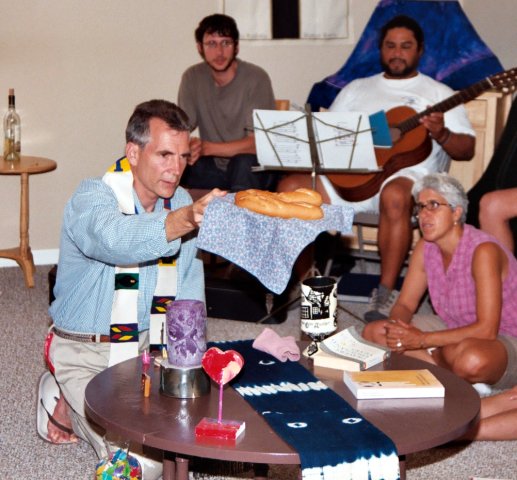
Miracles are happening all around us in the wake of Pope Benedict XVI’s July 7th Motu Proprio liberating the Ancient Roman Rite of Mass, which was never abrogated. Our dear Bishops, our shepherds, after years of oppression, are, for the first time, emboldened to demand liturgical excellence from their priests—at least those who intend to offer what is being called the “extraordinary” rite of Mass. How very encouraging to be reminded that it has been our bishops who have been diligently preserving an understanding of the Latin language and ancient liturgy all these years, so that they may now put that hard work to good use in approving the competency of all the priests in their dioceses who intend to begin offering the ancient liturgy in this ancient language starting this September 14. It must be a mark of their profound humility, to give just one example, that rather than humiliate the Holy Father by openly correcting the persistent improper translation, in the Novus Ordo Missae, of the Latin “pro multis” from “for all” to “for many” they have waited humbly these almost 40 years for the Holy Father to correct an error that even elementary students of Latin must have known all along. How they must have suffered under the cross of personal criticism whilst engaged in this courageous effort to hide their father’s nakedness. I’m confident that these bishops will be more than happy to divert diocesan funds in order that as many priests from their dioceses as desire can attend the training seminars being offered by the Priestly Fraternity of St. Peter in how to offer the Traditional Latin Mass “well and in accord with Summorum Pontificum’s terms.”
The fact is that their obviously imbalanced enforcement of the two different sets of rubrics, the Novus Ordo Missae, and the Traditional Latin Mass according to the 1962 Missal, sends a very clear and resounding message:
What is perfect must ever remain so, and what was never perfect, and hence ever changing, was never worth the trouble to safeguard in the first place.